

Vehicle Fire Suppression Maintenance UAE: Inspection and Service Checklist
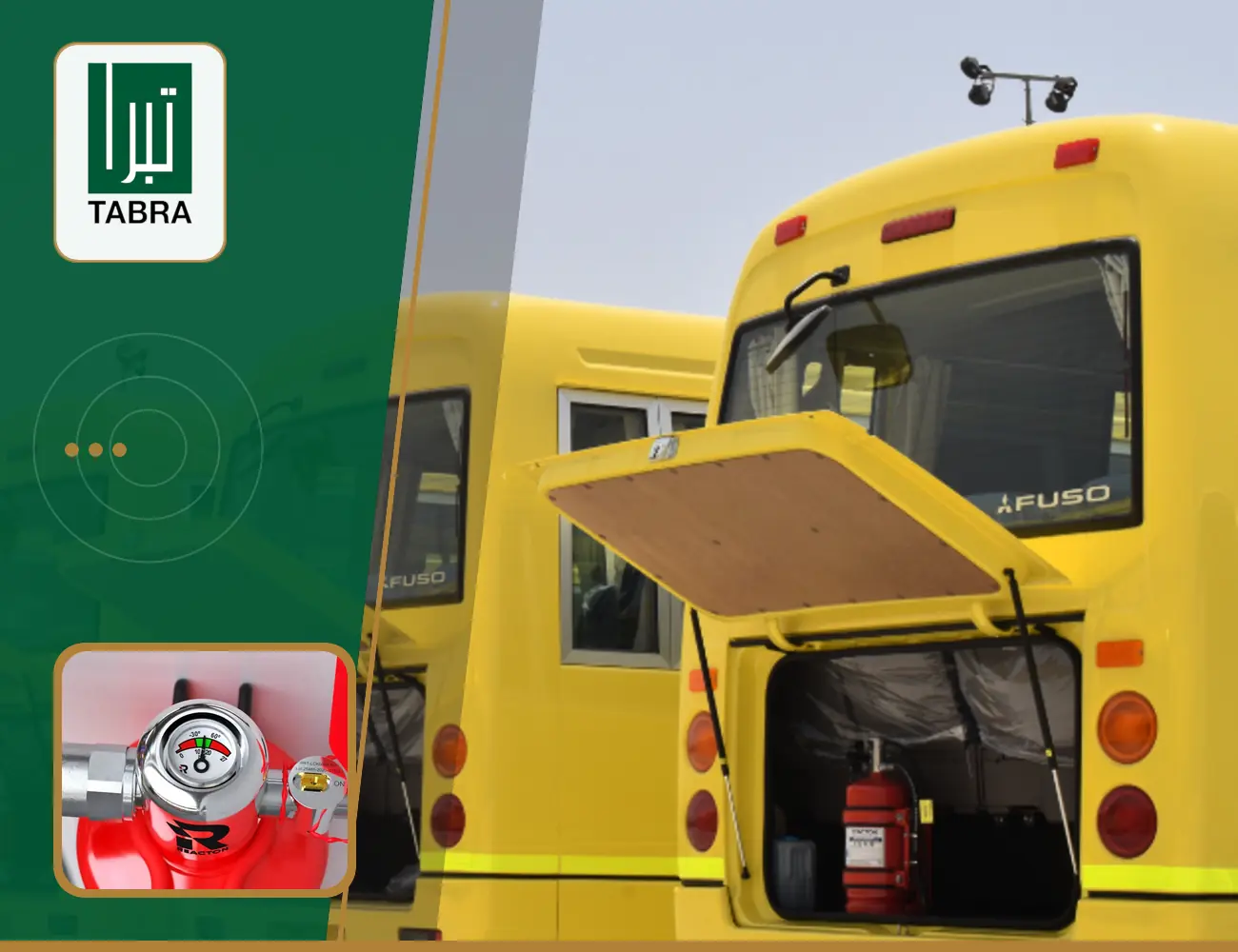
A vehicle fire-suppression system cannot be treated as “install and forget” equipment. Effective vehicle fire suppression maintenance UAE fleets can rely on requires the installed system to remain identifiable, secure, unobstructed and consistent with its manufacturer-approved configuration.
The correct maintenance programme depends on the exact system, vehicle, extinguishing agent, operating environment and applicable requirements. Operators should therefore follow the current manufacturer documentation and any vehicle-specific instructions rather than applying a generic annual or six-month interval copied from another country or product.
This guide explains what drivers, workshop personnel and competent service providers should check—and when a defect requires escalation.
Divide Maintenance Responsibility Into Three Levels
One of the most useful ways to manage vehicle fire suppression maintenance UAE operations is to divide responsibility into three levels.
Level 1: Driver or operator observations
Drivers can notice visible or reported changes without dismantling, testing or adjusting the system. Their role is to identify abnormalities and escalate them through the fleet’s defect-reporting process.
Examples include:
- A warning or system-status indication.
- A visibly damaged tube, hose or component.
- A loose or hanging part.
- An obstructed nozzle.
- Evidence that a cylinder or bracket has moved.
- An accidental impact in the protected compartment.
- Signs that the system has discharged.
- Missing or unreadable identification.
Drivers should not be instructed to disconnect, recharge or reset safety-critical equipment unless the applicable manufacturer procedure explicitly assigns that action to them and they have received suitable training.
Level 2: Workshop condition checks
Workshop personnel are well placed to identify whether routine vehicle work has affected the installed system. A condition check can accompany engine servicing, electrical repairs, cleaning or modification.
The workshop should compare visible component positions against the installation record where available and report any change. It should not improvise replacement parts, bend pipework back into position or move detection tubing to gain access.
Level 3: Competent system inspection and service
Technical inspection, functional assessment, repair, recharge and component replacement should follow the exact manufacturer instructions and be performed through an appropriate technical route.
The competence, tools and procedures required may differ by system. A REACTON configuration should be serviced according to the current documentation applicable to that specific system rather than a generic checklist prepared for another manufacturer.
This three-level structure prevents two common failures: ignoring obvious defects until the next scheduled service and allowing unqualified personnel to alter the system.
How to Set a Vehicle Fire Suppression Maintenance UAE Schedule
There is no defensible universal service interval for every system and vehicle. A vehicle fire suppression maintenance UAE schedule should be assembled from several sources:
- Current manufacturer inspection and maintenance instructions.
- System-model and extinguishing-agent requirements.
- Vehicle-specific installation documentation.
- Applicable technical or regulatory requirements.
- Fleet or contractual specifications.
- Operating severity.
- Previous defects and service history.
- Condition-based inspection triggers.
A vehicle operating on paved urban routes may expose its components to different conditions from construction equipment working around dust, vibration, debris and hydraulic fluids. This does not authorize the fleet to replace the manufacturer’s schedule, but it may justify additional observations or condition checks.
Create one master schedule for each system and vehicle family. Do not assume that a newly acquired vehicle has the same installation or service requirements as older fleet assets.
The schedule should distinguish:
- Routine operator observations.
- Workshop checks during vehicle maintenance.
- Planned system inspections.
- Manufacturer-required technical servicing.
- Cylinder or agent-related actions.
- Time-limited component replacement where applicable.
- Event-triggered assessment.
- Post-discharge service.
The next action should be recorded as a date, operating threshold or defined event—not left as “service when needed.”
Driver Observation Checklist
A driver checklist should be short enough to use consistently. It is not intended to certify the system or replace formal inspection.
For vehicle fire suppression maintenance UAE fleets, the driver or operator may be instructed to report:
- A system warning, alarm or abnormal indicator.
- Pressure indication outside the marked normal range, where the installed system has a visible gauge and the manufacturer permits this observation.
- Missing, damaged or unreadable labels.
- A cylinder or container that appears displaced.
- Loose brackets or visible fasteners.
- Detection tubing that appears cut, crushed, melted, heavily abraded or detached.
- Hoses or pipework hanging outside their normal route.
- A nozzle that appears blocked, damaged or redirected.
- Damage to a manual actuator or safety device.
- Evidence of an agent leak or system discharge.
- Damage following an engine-compartment incident.
- Any modification completed without corresponding suppression-system documentation.
A report should identify the vehicle, date, observed condition and location. Photographs can support triage, but they should not be used as the sole basis for confirming that a safety-critical system is serviceable.
If the system indicates loss of pressure, discharge or significant damage, the fleet should follow its safety procedure and obtain competent assessment rather than assume the vehicle remains adequately protected.
Workshop Checklist After Vehicle Maintenance
Engine and equipment repairs are major triggers for vehicle fire suppression maintenance UAE checks because service work can unintentionally disturb system components.
Before work begins, workshop personnel should identify:
- The cylinder or agent container.
- Detection tubing.
- Distribution hoses or pipework.
- Discharge nozzles.
- Manual actuation devices.
- Alarm or status wiring, where applicable.
- Pressure or status indicators.
- System labels.
- Areas where cutting, welding or high-temperature work will occur.
Where system components obstruct required repairs, the workshop should arrange the appropriate technical support rather than moving them without authorization.
After the vehicle work is completed, check for visible changes in:
Detection tubing
- Original routing.
- Secure supports.
- Abrasion.
- Kinks or crushing.
- Contact with moving parts.
- Exposure to sharp edges.
- Unintended proximity to high-temperature components.
- Contamination or damage caused during cleaning.
Hoses and pipework
- Secure routing.
- Loose connections visible from the exterior.
- Physical damage.
- Unsupported sections.
- New contact with vibrating components.
- Corrosion or contamination.
- Changes introduced by replaced engine parts.
Discharge nozzles
- Position and orientation.
- Obstruction.
- Missing protective features where specified.
- Paint, oil, mud or debris accumulation.
- Movement caused by repair work.
- Adequate clearance from new components.
Cylinder and mounting assembly
- Secure mounting.
- Visible corrosion or impact damage.
- Legible identification.
- Accessible status or pressure indication.
- No interference from newly installed vehicle equipment.
The workshop record should state whether the suppression system was visibly unaffected, a concern was reported, or specialist inspection was requested. It should not claim technical certification unless that was actually performed under the appropriate process.
Formal Vehicle Fire Suppression Inspection and Service Checklist
A formal vehicle fire suppression maintenance UAE visit should be based on the exact system documentation. The following categories help fleet managers understand the expected scope, but they are not instructions for unauthorized testing or disassembly.
1. System identification and documentation
The technician should be able to identify the:
- Manufacturer.
- System family and model.
- Release configuration.
- Cylinder or container.
- Extinguishing agent.
- Protected area.
- Installation record.
- Previous service information.
- Applicable labels and component identification.
A system that cannot be matched to reliable documentation may require further investigation before its condition can be confirmed.
2. Cylinder, container and pressure status
Depending on the system, service may involve checking:
- External cylinder condition.
- Mounting security.
- Identification and labels.
- Seal condition.
- Pressure indication.
- Agent or assembly weight where required by the manufacturer.
- Valve condition.
- Evidence of leakage, corrosion, impact or unauthorized alteration.
Not every system uses the same pressure indicator or verification method. Requirements for weighing, recharge, pressure testing or component replacement must come from the relevant documentation.
3. Detection system
Inspection points can include:
- Detection-tube routing and condition.
- Secure supports.
- Exposure to damage.
- Correct connection to the actuation mechanism.
- Condition of other detection devices where fitted.
- Evidence of contamination or unauthorized repair.
- Compatibility of replacement materials.
Detection tubing must not be patched using improvised connectors or materials.
4. Distribution components
For indirect-release or nozzle-based configurations, the inspection may include:
- Pipework and hose condition.
- Secure supports.
- Fittings.
- Nozzle quantity and location.
- Nozzle direction.
- Obstruction or contamination.
- Protective caps or features specified by the manufacturer.
- Changes to the protected compartment.
For direct-release configurations, the dual detection-and-discharge role of the tubing makes its routing and integrity particularly important.
5. Manual activation, indication and auxiliary functions
Where the system includes these features, the service scope may examine:
- Manual actuator condition.
- Safety devices.
- Alarms or indicators.
- Pressure switches.
- Electrical connections.
- Shutdown or signalling interfaces.
- Identification and operating instructions.
Functional tests must be completed only according to the manufacturer’s controlled procedure. A visual check is not equivalent to a successful functional test.
6. Protected-area condition
The system cannot be assessed in isolation from the vehicle. The technician should consider whether the protected compartment has changed since installation.
Relevant changes include:
- Replaced engines.
- Relocated batteries.
- New hydraulic equipment.
- Modified exhaust components.
- Added shields.
- Changed ventilation.
- New electrical installations.
- Structural repair.
- New auxiliary equipment.
- Accumulated oil, grease or debris.
A valid component inspection does not necessarily confirm that an altered compartment still matches the original suppression design.
7. Service documentation
The record should identify:
- Vehicle registration or fleet number.
- VIN or chassis number.
- System identification.
- Inspection date.
- Inspection scope.
- Findings.
- Corrective work performed.
- Outstanding defects.
- Components replaced.
- Technician or service-provider identification.
- Next action under the applicable schedule.
- Relevant documents supplied to the fleet.
Avoid vague entries such as “system checked” without stating what was checked and what result was obtained.
Inspections Triggered by Events, Not Just Dates
A strong vehicle fire suppression maintenance UAE programme includes event-based triggers.
After engine or electrical repairs
Arrange an assessment if system components were removed, displaced, disconnected, shielded or exposed to heat and tools. Even when the suppression system was not deliberately modified, the protected environment may have changed.
After a collision or major impact
A collision can damage a cylinder mount, tubing, pipework, wiring, actuator or protected compartment. Damage may not be obvious from the exterior.
After pressure loss or an abnormal indicator
Do not merely restore the indicator or refill the system without identifying the cause. Possible causes and corrective actions depend on the product.
After accidental component damage
Cut tubing, crushed hoses, redirected nozzles or damaged actuators require assessment under the relevant manufacturer procedure.
After major cleaning
Pressure washing, steam cleaning, degreasing and chemical exposure may disturb or contaminate accessible components. Operators should follow product and installation guidance during cleaning.
After vehicle modification
Added equipment can introduce new hazards, block discharge paths or alter airflow. The fire-risk assessment and system design may need review.
After system activation
A discharged system should be treated as requiring competent assessment, restoration and documentation. The vehicle fire or heat event should also be investigated, and damage to the protected area corrected before return to normal operation.
A date-based service schedule without these triggers leaves significant gaps between planned inspections.
UAE Regulatory and Conformity Considerations
The UAE has a defined technical-regulation framework for fire-suppression systems intended for bus and coach engine compartments. UAE Cabinet Resolution No. 20 of 2021 identifies the relevant technical regulations, including UAE.S 5041:2021.
This should not be interpreted as one universal maintenance rule for every commercial vehicle. The applicable obligations can depend on:
- Vehicle category.
- Passenger capacity.
- Operating activity.
- Registration jurisdiction.
- Contract or tender specification.
- System and installation.
- Responsible authority.
- Inspection process.
Relevant standardization and conformity functions previously associated with ESMA now fall under the Ministry of Industry and Advanced Technology. Operators can consult MoIAT’s product conformity data when verifying the scope of current records.
A vehicle fire suppression maintenance UAE service record is not automatically equivalent to:
- Product conformity.
- Manufacturer certification.
- Installer authorization.
- Installation-centre recognition.
- A vehicle-specific installation certificate.
- Inspection acceptance.
- Regulatory approval.
Each document should be described according to what it actually proves.
For a bus, school-transport vehicle or another regulated application, confirm current requirements for the exact vehicle rather than relying on a service provider’s generic “UAE approved” statement.
Defect Priority and Escalation Framework
Fleet managers need a consistent way to respond to findings.
| Finding level | Examples | Practical response |
|---|---|---|
| Observation | Dirty but readable label; record discrepancy; non-critical access issue | Record and assign follow-up under the applicable procedure |
| Technical concern | Loose support, changed routing, suspected obstruction, abnormal indicator | Refer for competent assessment before relying on the system |
| Significant damage | Cut tubing, damaged cylinder, crushed hose, missing nozzle, disconnected actuator | Apply the fleet’s safety escalation procedure and obtain technical assessment |
| System discharge | Agent released or activation evidence present | Treat the system as requiring restoration and investigate the initiating event |
| Unverified modification | Engine or equipment layout changed without system review | Compare against the approved design and arrange reassessment |
This table is a management tool. It does not independently determine whether a vehicle is legally roadworthy or safe to operate. That decision must follow the applicable technical, operational and regulatory process.
Build a VIN-Based Maintenance Record
Fleet-level vehicle fire suppression maintenance UAE becomes difficult when records are stored only by cylinder number, workshop job or paper certificate.
Use one record for each vehicle containing:
- Fleet asset number.
- Registration number.
- VIN or chassis number.
- Make, model and model year.
- Vehicle category and operational use.
- Fire-suppression manufacturer.
- System model and configuration.
- Extinguishing agent.
- Protected area.
- Installation date where verified.
- Installation-document reference.
- Applicable conformity-document reference.
- Previous inspection and service dates.
- Findings and corrective actions.
- Replaced components.
- Discharge history.
- Collision or major-repair history.
- Vehicle modifications.
- Next scheduled action.
- Responsible fleet owner.
Retain photographs when useful, but do not use them in place of controlled service records.
For mixed fleets, create groups by vehicle model, engine layout and system configuration. This helps identify whether a defect is isolated or appears across several similar installations.
Common Maintenance Mistakes
Copying an interval from another system
A six-month, annual or multi-year schedule published for one product or jurisdiction should not be transferred automatically to another.
Treating a clean engine compartment as a serviced system
Cleaning can improve visibility but does not verify pressure, agent condition, actuation or system integrity.
Allowing mechanics to move components temporarily
A temporary move can become undocumented permanent routing. Arrange the correct technical intervention.
Replacing parts by appearance alone
Components that look similar may not have the same specification or approval scope.
Ignoring low pressure or abnormal status until inspection
A safety system displaying an abnormal condition should be escalated under the applicable procedure.
Checking components without checking the protected area
The components may appear undamaged even though vehicle modifications have made the original design inappropriate.
Using one certificate for several vehicles without clear traceability
Vehicle-specific records should identify the relevant asset, system and service activity.
Assuming a service tag guarantees inspection acceptance
A tag records a defined service action. It does not guarantee the result of a separate authority inspection.
Avoiding these mistakes makes vehicle fire suppression maintenance UAE more reliable and easier to audit.
Choosing a Vehicle Fire Suppression Service Provider
Before arranging service, ask the provider:
- Can you identify and service the exact installed system?
- Which manufacturer documentation will govern the work?
- What inspection scope is proposed?
- Are repairs, recharge and component replacement included or separately authorized?
- How will vehicle modifications be assessed?
- What vehicle-specific record will be issued?
- Will unresolved defects be clearly documented?
- Which conformity or certification claims apply to the exact system?
- How will multiple fleet vehicles be scheduled and tracked?
- What information is required before the visit?
For a qualified enquiry, provide:
- Vehicle registration card.
- VIN.
- Make, model and model year.
- Fleet number.
- Installed-system photographs.
- System label and cylinder photographs.
- Current service record.
- Existing certificate where relevant.
- Description of the fault or event.
- Date and nature of recent engine repairs.
- Number of vehicles requiring assessment.
This information helps the provider establish the likely scope before issuing a quotation. It does not replace physical inspection.
How Tabra Can Support UAE Fleet Operators
Tabra General Trading LLC has operated in the UAE since 1997 and provides vehicle-safety solutions from locations in Dubai and Abu Dhabi. Its product portfolio includes REACTON Automatic Fire Suppression Systems, including direct- and indirect-release configurations.
Fleet operators seeking vehicle fire suppression maintenance UAE support can contact Tabra with the vehicle and system information listed above to request an inspection or service review.
The review should confirm the installed system, vehicle application, available records and reported condition before the scope, corrective work or quotation is finalized. Compatibility, conformity, certificate issuance and inspection outcomes should not be promised before the relevant technical checks are completed.
For related information, readers can also review Tabra’s:
- vehicle fire suppression guide for UAE fleets.
- engine fire suppression system guide.
- fire-suppression accessories and components.
- automatic fire-suppression certificate service.
Frequently Asked Questions About Vehicle Fire Suppression Maintenance UAE
Can a driver complete the formal system inspection?
A driver can perform defined observations, such as reporting visible damage or an abnormal indicator. Formal inspection, functional testing, repair, recharge and component replacement should follow the manufacturer’s instructions and the appropriate technical process.
Should the system be checked after ordinary engine servicing?
The workshop should confirm that tubing, hoses, pipework, nozzles, wiring and brackets were not disturbed. If components were moved, exposed to damage or no longer match the installation record, arrange competent assessment.
Does every vehicle fire-suppression system use a pressure gauge?
No. System designs and status-verification methods vary. The inspection checklist must match the installed product rather than assume every system has identical components.
What should happen after detection tubing is damaged?
Protect the vehicle according to the fleet’s safety procedure and refer the system for competent assessment. Do not patch or replace safety-critical tubing with unverified materials or connectors.
Is a maintenance tag the same as an inspection certificate?
No. A maintenance tag records a specific service activity. Product conformity, installation documentation, inspection acceptance and certificate issuance are separate matters.
Must the system be inspected after a collision if it did not activate?
An assessment may be necessary because impact can affect the cylinder mount, tubing, pipework, nozzles, actuators or compartment layout without causing discharge.
What records should a fleet retain?
Maintain vehicle identification, installed-system details, installation records, inspections, defects, corrective actions, component replacements, discharge events and upcoming service actions. Retention periods should follow applicable requirements and company policy.